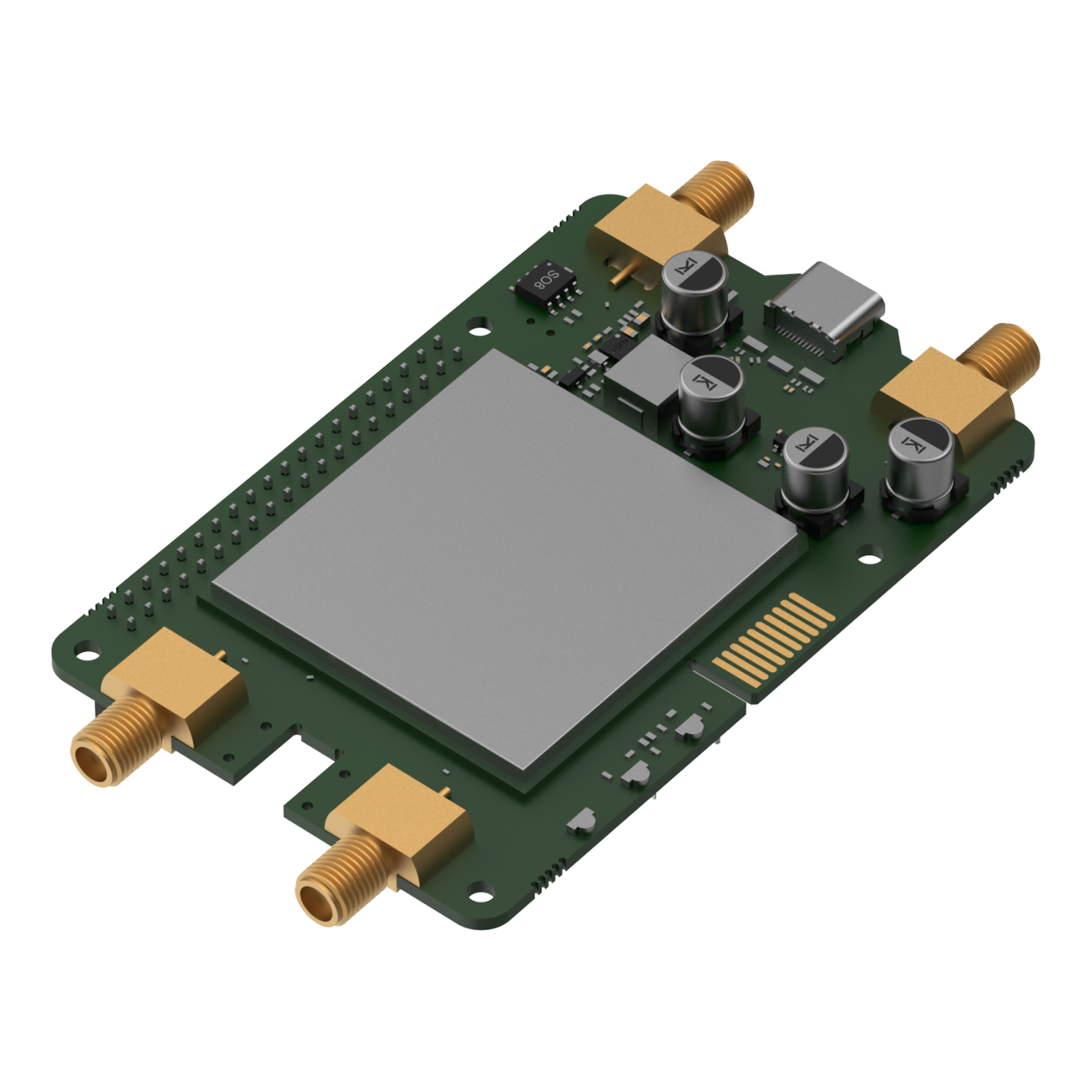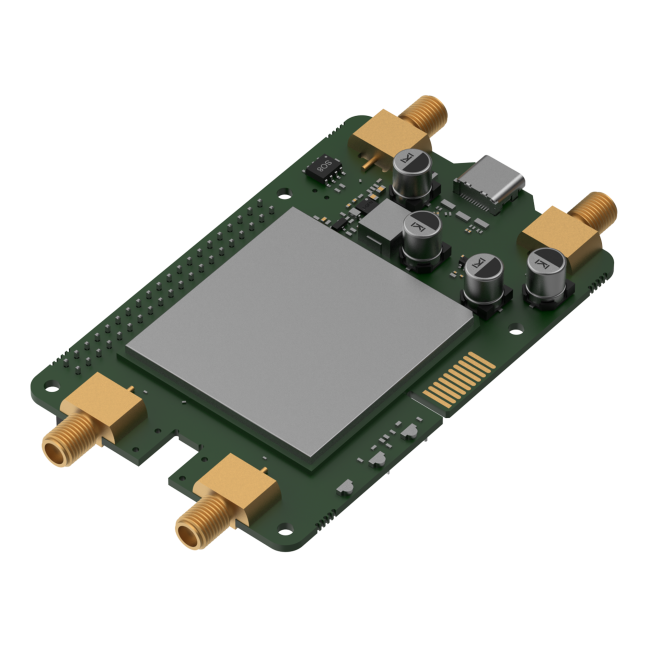
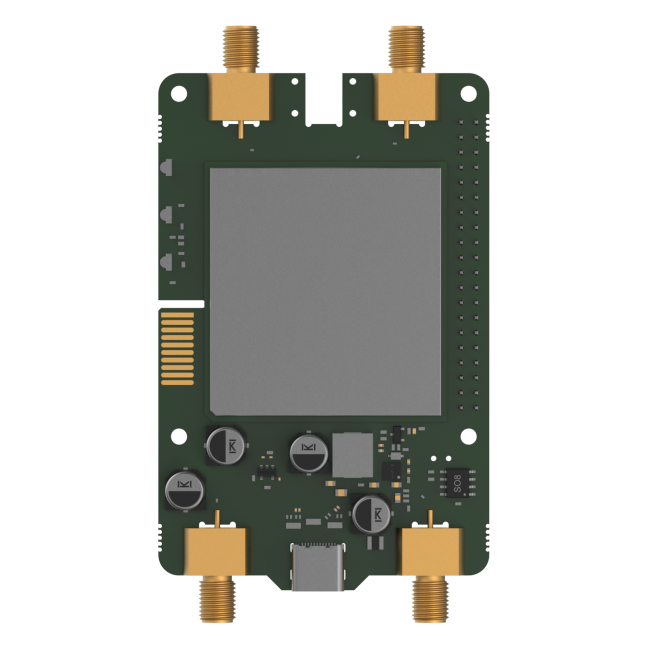
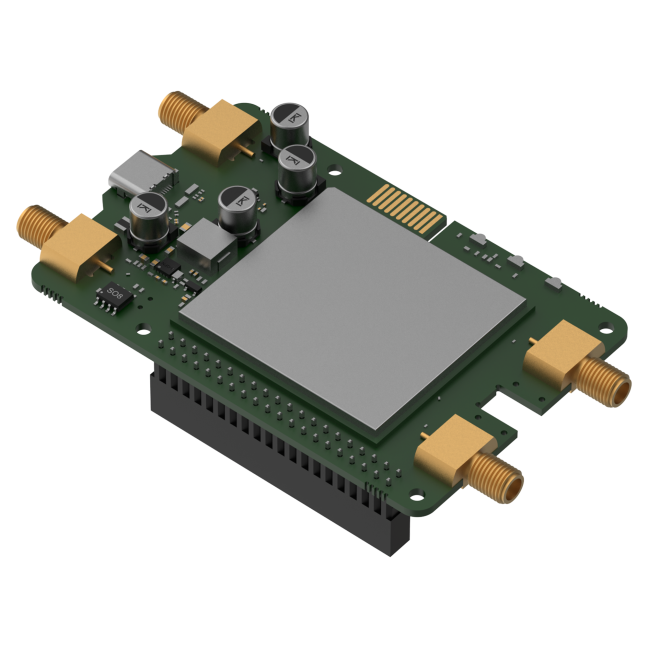
Teltonika EBD050 CALYX – 5G HAT+ for Raspberry Pi 4/5
Code: EBD0500000005G SA/NSA HAT+ for Raspberry Pi 4 and 5 with USB 3.0, GPIO modem control and four SMA antenna connectors. High-throughput cellular expansion for embedded systems.
EBD050000000: mounting kit, GPIO extender and USB accessory included. Raspberry Pi, antennas and power supply sold separately.
-
5G SA / NSA
Sub-6 GHz
Supports standalone and non-standalone networks.
USB 3.0
High-speed host link
Designed for data-intensive applications.
4 × SMA
Cellular antennas
5G downlink support for 4 × 4 MIMO.
Pi 4 / Pi 5
HAT+ integration
GPIO control and included mounting accessories.
Why choose EBD050?
A cellular expansion board for developers who need 5G capability, a fast USB host connection and direct Raspberry Pi integration.
Use 5G across network architectures
Support for 5G standalone and non-standalone networks lets your design connect to compatible deployments. LTE Cat 19 and 3G support provide additional network options where available.
Build for higher data throughput
A USB 3.0 data interface complements the 5G modem for workloads such as image transfer, edge data collection and connected computing. Actual performance depends on the complete system.
Integrate antennas for your installation
Four SMA connectors support an external antenna arrangement for the application. The 5G modem supports 4 × 4 MIMO on the downlink.
Keep host control in your application
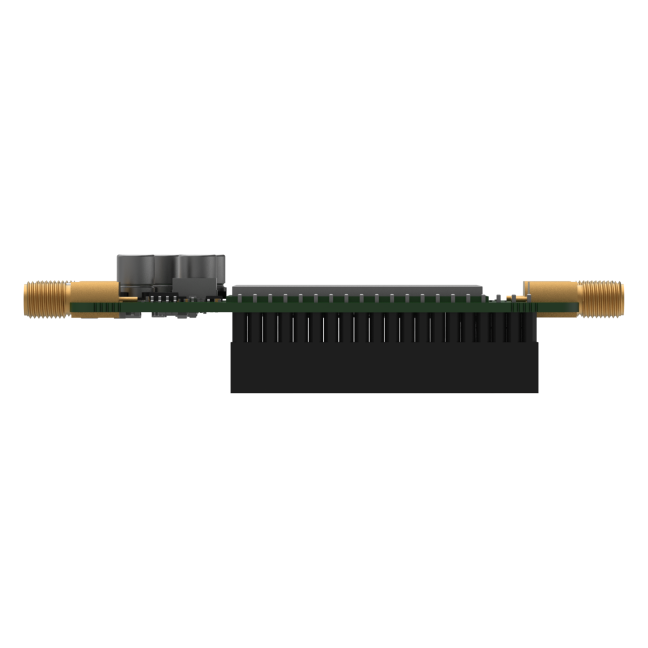
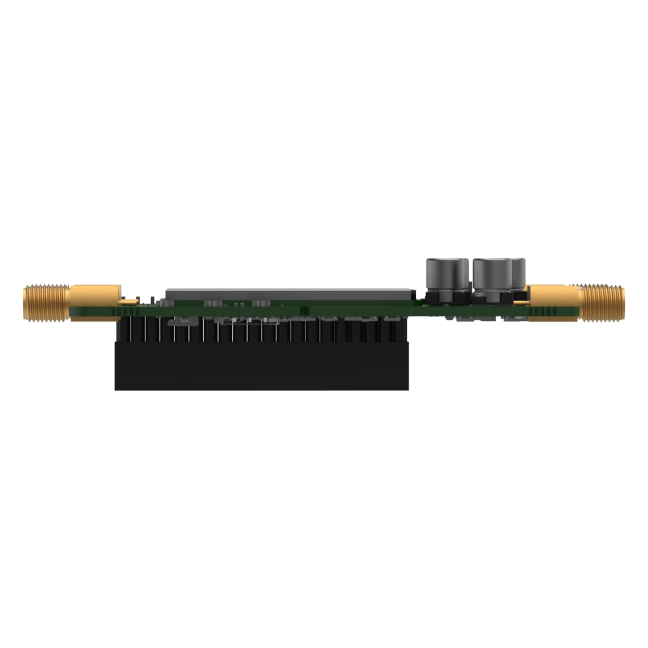
The 40-pin header provides modem power, wake and reset controls. Supplied fasteners and a header extender simplify mounting onto Raspberry Pi 4 or 5.
Plan the complete systemUse with a Raspberry Pi 4 or 5, compatible cellular antennas, a nano-SIM with a data plan and suitable power. Configure the host drivers and operator APN using the official guide.
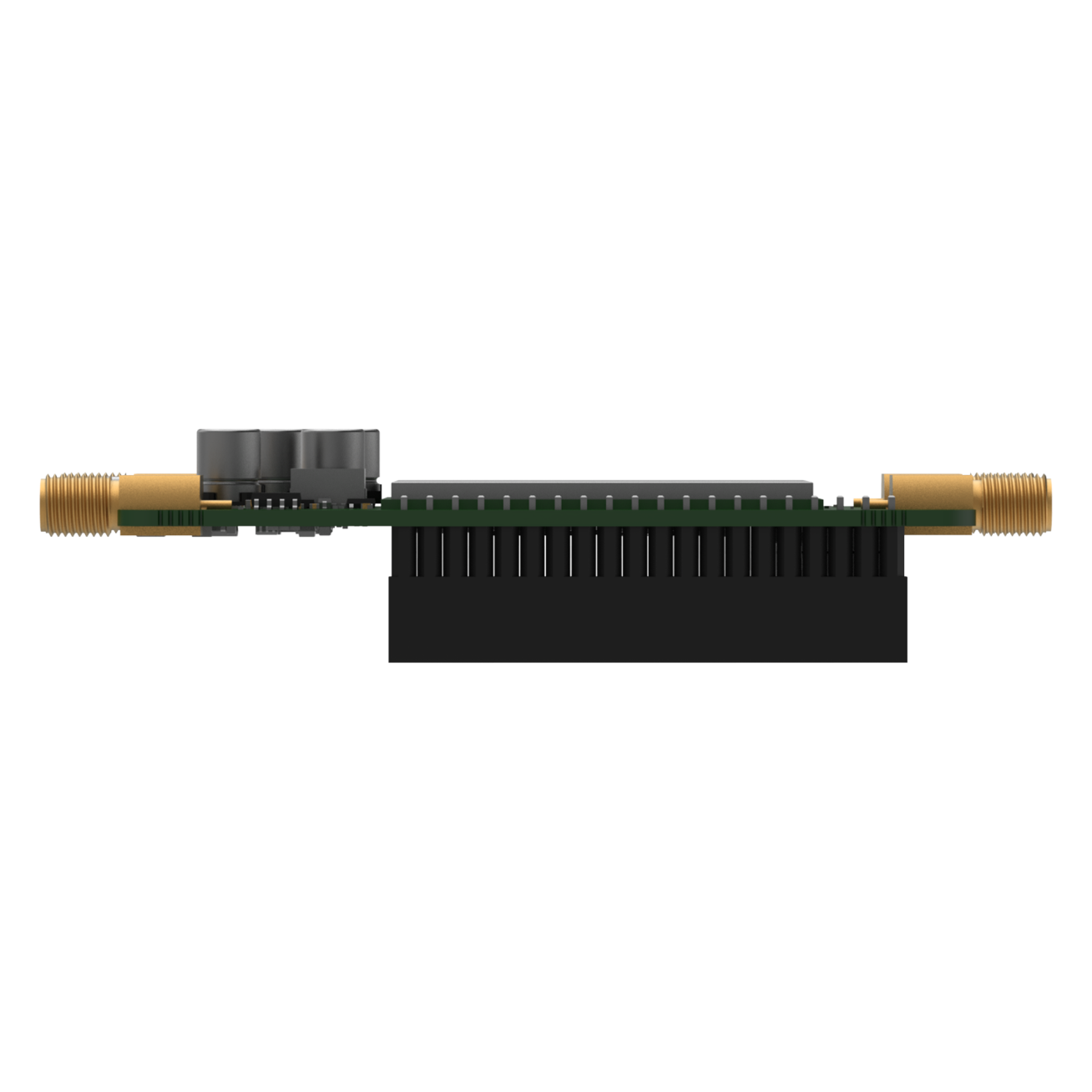
Compact board-to-board integration
The 40-pin header and mounting points support a tidy Raspberry Pi assembly.
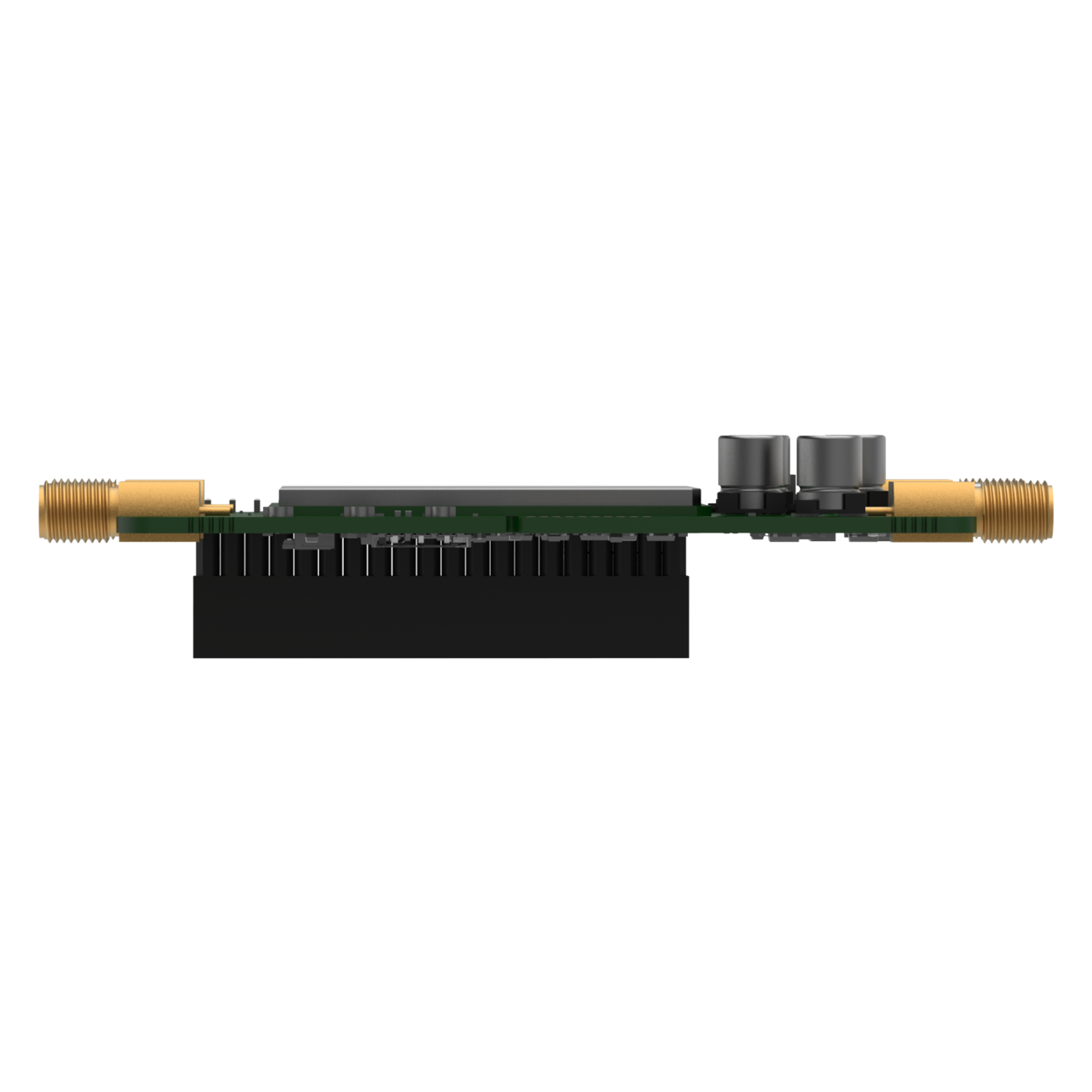
Accessible hardware interfaces
USB Type-C and GPIO connections support data transfer and host-controlled modem operation.
Properties
Cellular connectivity
Mobile technology 5G Sub-6 GHz SA/NSA · 3GPP Release 16 5G NR bands n1, n3, n5, n7, n8, n20, n28, n38, n40, n41, n71, n75, n76, n77, n78 LTE bands FDD: B1, B3, B5, B7, B8, B20, B28, B32, B71 · TDD: B38, B40, B41, B42, B43 Fallback LTE Cat 19; 3G B1, B5, B8 where available 5G data rate SA: up to 2.4 Gbps down / 900 Mbps up; NSA: 3.4 Gbps / 550 Mbps LTE data rate Up to 1.6 Gbps down / 200 Mbps up SIM / antenna connectors 1 × nano-SIM (4FF), push-pull · 4 × SMA 5G MIMO 4 × 4 downlink; 2 × 2 uplink Host integration
Compatible host Raspberry Pi 4 and Raspberry Pi 5 Form factor Embedded cellular HAT+ expansion board Data interface USB 3.0 via USB Type-C GPIO header 40-pin · modem on/off, wake and reset GPIO logic 3.3 V logic levels; follow the official pinout Audio interface PCM audio support Software setup Host configuration and operator APN required; see Quick Start Guide Power & installation
USB power 5 V DC Header supply 5 V and 3.3 V through the 40-pin header Mounting Supplied fasteners and GPIO header extender Dimensions (W × H × D) 56 × 23.11 × 100.8 mm Operating temperature −40 to +75 °C (module rating) Ordering & shipping
Order code / MPN EBD050000000 Manufacturer Teltonika Networks EAN 4779051845897 Packaged weight 171.544 g Package dimensions (L × W × H) 85 × 102 × 28 mm Speeds are theoretical modem maxima specified by Teltonika. Actual throughput and coverage depend on the operator, antennas, signal, host and configuration. The complete system must meet the operating limits of all components.
Set of equipment
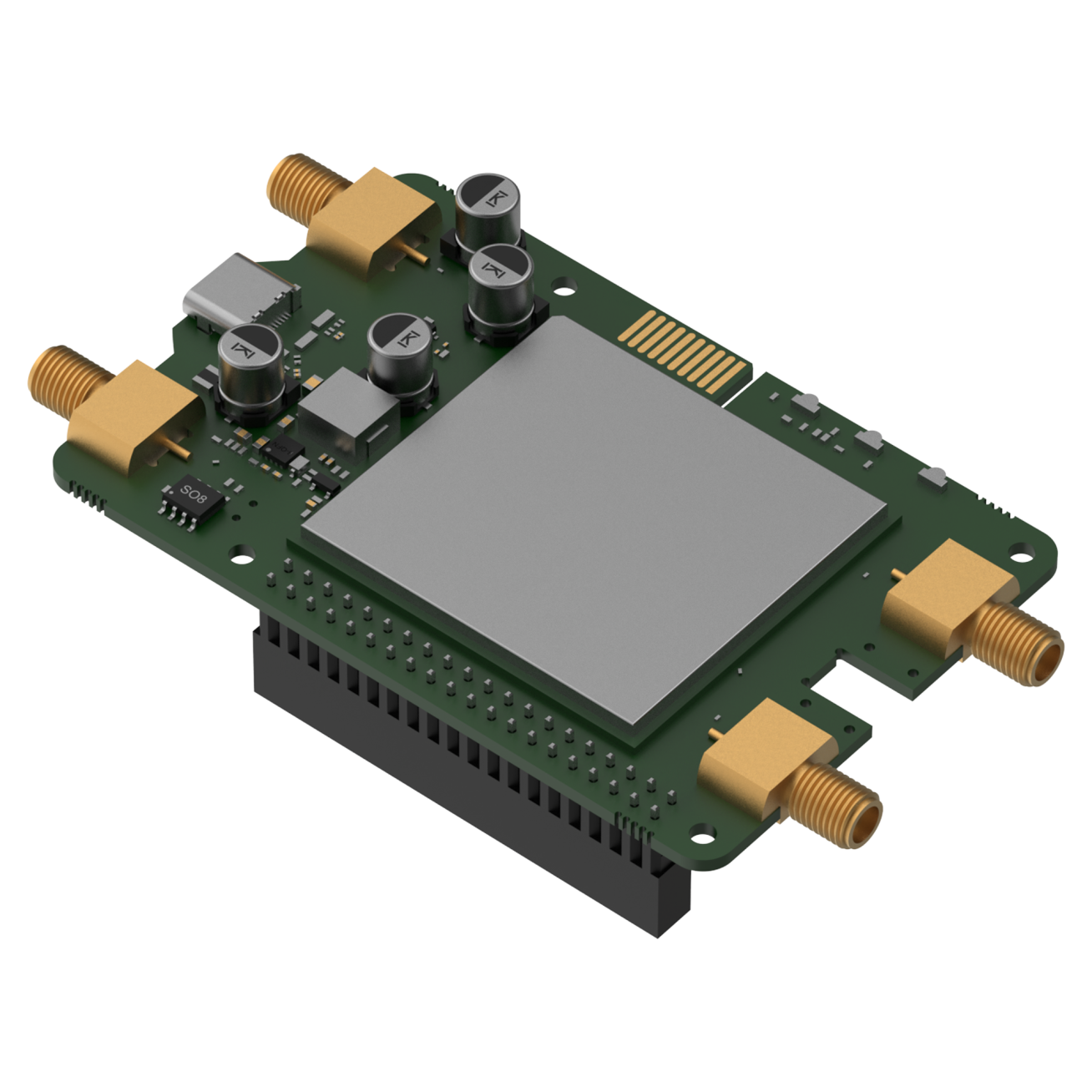
Standard package · EBD050000000
- CALYX EBD050 5G HAT+ board
- Fasteners kit
- 40-pin GPIO header extender
- USB Type-C to USB Type-A accessory
- Quick Start Guide
- Packaging box
Raspberry Pi, cellular antennas, SIM/data service and power supply are not included. Select accessories suitable for your installation.
Documents
Official Teltonika resources for wiring, installation and host configuration.
Frequently asked questions
Is EBD050 a complete router?
No. EBD050 is a cellular HAT+ expansion board for a Raspberry Pi host. The Raspberry Pi, host software and suitable accessories complete the system.
Which Raspberry Pi models are supported?
Teltonika specifies Raspberry Pi 4 and Raspberry Pi 5. Follow the official mounting and GPIO instructions for the selected host.
Are antennas and a power supply included?
No. EBD050000000 includes the board, fasteners, GPIO header extender, USB accessory, guide and box. Cellular antennas, power supply and Raspberry Pi are supplied separately.
How is EBD050 configured?
Use the Raspberry Pi host and Teltonika's Quick Start Guide to install the required drivers, configure the mobile operator APN and establish the USB data connection. AT-command documentation is available in the manual.
Does EBD050 support both 5G SA and NSA?
Yes. EBD050 supports Sub-6 GHz 5G standalone and non-standalone modes, plus LTE Cat 19 and 3G. Availability depends on the operator, supported bands and local network.
Will it work with my mobile operator?
Check that the operator supports the listed bands and provides coverage at the installation location. An active nano-SIM, data plan, correct APN and suitable antennas are required.
Manufacturer